
Surviving the Learning Revolution
In person, online, and the cost of getting it wrong

What We Know About Online and In-Person Learning
Whether you are creating education or a consumer, I am going to give you the conclusion up front. “In person” is the way people learn best. Online (both asynchronous (recorded) and synchronous (live)) can work for “skills transfer” for highly motivated learners, but not for inexperienced learners.
When we cannot be in a room together, we adults learn better when we are connected to real people who are behaving in ways that reflect concern about us and what we are learning, virtually. This means that in general online synchronous, live, is better than online asynchronous, on demand. And interactive is better than a webinar for education.
The findings substantiate practices of many companies who will invest in “in person” education when it comes to executive experiences — such as board or leadership team trainings.
Our world has changed quickly. Educational options — and our concepts of what counts as learning — are in flux.More options is a good thing. At the same time, we want to be sure we are doing what works and not harming our kids.
Let’s dive into what’s working and what’s not — but first, a little context.
How We Got Here: A Brief History of Online Instruction
For years, educational technology companies sold universities on ever more sophisticated technology for learning. When my career began — a freshly minted philosophy professor in 2000 — there was no question that “in person” learning was best. There were discussions about whether teaching could ever be effective outside the classroom. Education technology was in its infancy, expensive and clunky. Educators adapted slowly, as usual.
At the same time, technology fueled the emergence of for-profit universities like the University of Phoenix, which drove much of the early online enrollment growth in the late 1990s and early 2000s. Many more “for profits” followed.
As the for-profits rose, universities and other organizations learned that online education was efficient and accretive to their bottom line. The early 2000s saw more flexible learning management systems, and in 2012 came the MOOCs — Massive Open Online Courses. The New York Times declared 2012 the year of the MOOC. Coursera, edX, and Udacity launched in rapid succession, backed by Stanford, Harvard, and MIT. Georgetown, where I was an Assistant Provost, soon followed.
The pitch was intoxicating: the best university education on earth, available to anyone with an internet connection, for free. MOOCs took the sting of commercialization away from going online — or that was how they were sold to universities.
The democratic promise of MOOCs was a disappointment. Despite serious investment, research found that the typical MOOC learner was not an eager first-generation student seeking a way up. They were already educated, already employed, and already living in a country with rich educational resources. The technology did not reach the audiences it had aimed at, and course completion rates were dismal. This was an early and important proof of a pattern that would repeat: online asynchronous learning disproportionately serves people who are already educated and good at learning.
The story of the MOOC race reminds us of the power education technology companies and universities had when it was expensive to create and market video based educational content. Now anyone with a phone, an LMS subscription, and a worthwhile offer can compete in this arena.
Before the pandemic in 2019, the global e-learning market was valued at roughly $200 billion. By 2025, estimates range from $325 billion to over $440 billion depending on how the market is defined — in any case, more than doubled — and projections point to continued rapid growth through 2032. Creator platforms — Kajabi, Teachable, Thinkific — collectively host hundreds of thousands of course sites. Kajabi creators alone have earned over $10 billion. Education has been democratized in a most unexpected way.
Since 2012, we have been learning that not everyone learns well without human interaction and intervention. In fact, it is the exception. We might even conclude, as technology has improved, we have been training ourselves to be able to do business and to learn on screens.
Meanwhile, the for-profit universities that had pioneered online learning were collapsing under the weight of reputational problems based on concerning and even exploitative practices. The University of Phoenix peaked at nearly 470,000 students in 2010 and fell dramatically in the years that followed. Corinthian Colleges and ITT Educational Services closed entirely after loss of federal funding and investigations into fraud. The sector had grown by targeting anyone who could pay — including many vulnerable students, veterans, and low-income adults — recruited through misleading promises. The for-profit college industry had ballooned to a $35 billion enterprise, fueled by federal financial aid flowing to institutions whose business model was built on enrolling vulnerable students regardless of outcomes. People who were willing to work for a better life ended up saddled with debt and degrees of little value. This was nothing short of a tragedy.
In the meantime, traditional (nonprofit) universities were moving to adopt, and adapt the online model. They built online programs, hired instructional designers, licensed platforms, and admitted new crops of students. Tech was still a challenge, and long term vendor contracts kept tuitions high. Degrees proliferated, especially graduate degrees. The practice of making online learning an educational norm took hold.
By the time the pandemic arrived, and with it the rapid growth of subscription based video communication and education technology, many universities had the infrastructure in place to move in-person programs entirely online quickly. They did so in an unusually entrepreneurial way, it often wasn’t fully baked, but worked as an emergency business continuity measures. The price, in many cases, stayed the same, though education was far less expensive to deliver online.
Many consumers, and universities, and many faculty, liked it. The retreat from in person was initially thought to be temporary. But as it turned out, many in-person experiences never returned.
As technology improved, we adapted ourselves to be able to do things online, like learn, that we were not originally built for. We even came to prefer it.
Let’s ask the question. How is it really going? Can we really learn this way?
How Is Online Learning Going for Learners?
K–12
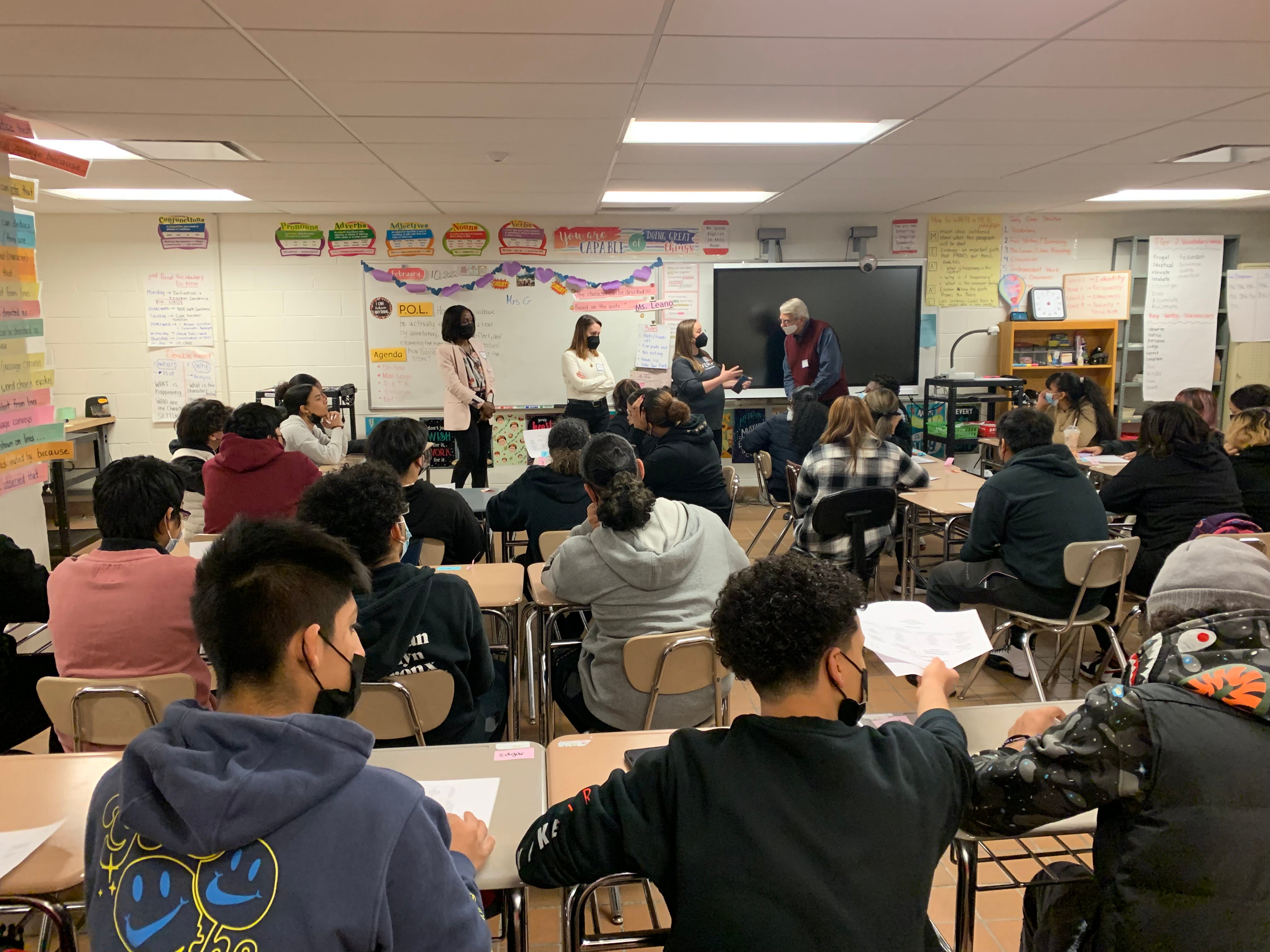
For K–12, there is serious concern and strong evidence that online learning does not work well. The pandemic was an uncontrolled experiment with terrible outcomes for students. There are grades of students in elementary schools right now who are still struggling because learning didn’t happen during the pandemic. Teachers will tell you. Moreover, research consistently links online, remote learning, and screens in general with isolation, anxiety, and disengagement in the K–12 population.
Children are the canaries in the coal mine, and what this tells us is simple. Relationships matter, social companionship matters, and learning to learn things the way we do, sitting at a desk, is hard, even in the presence of a teacher. For many young people it is not possible to learn looking at an image on a screen. Online adds a screen both in front of children sitting in a classroom (as enrichment) and also, sometimes, as a substitute for a classroom (school without walls). Neither demonstrate benefits that outweigh for the least experienced and youngest students compared to the problems they create. Education for children is better accomplished in small groups by caring, educated people — teachers.
The bottom line: In-person is not just better for children. For most children, it is the only way instructional education works.
Undergraduates
For undergraduates, there is a lot of concern and strong evidence that online (synchronous - live and asynchronous- video based - on demand) learning is not as good as in-person learning. Unsurprisingly, the research shows that online negatively impacts the weakest students. This is a real problem as many if not most universities have now made it easy for even residential undergraduates to combine online-live coursework with in-person. In fact, I have heard stories of residential undergrads tuning in to a Zoom class, from their dorm rooms. The time alone doesn’t sound great.
The research suggests that online works only for high-achieving, self-regulated students. Students who need structure, accountability, and social engagement suffer. This is the most robust finding across the research. And what this suggests is that learning online is less natural and requires us to manage ourselves very well. It is hard to believe there is not a cost to the learning in this kind of self-management.
The bottom line: Online amplifies differences, making it harder for less well-prepared students to learn. Students who can least afford a second-rate experience are most likely to receive one if it is online.
Graduate Students
For graduate students, predictably, there is less evidence that online produces poor outcomes; this is a good thing, because online has been widely accepted in graduate education from MBAs to medical education.
Two findings are concerning for graduate students when it comes to online. First, almost every expert interviewed in recent research acknowledges that the networking, relationship capital, and serendipitous professional connections built in high quality in-person programs remain a decisive advantage for people seeking career pivots or top-tier placements. Second, the subjective experience of learning — even when objective outcomes are comparable — consistently favors in-person.
The bottom line: Online graduate education delivers knowledge. In-person delivers knowledge plus the relationships that change people and jump-start careers.
Professional Education, Lifelong Learning, and Career Development
This is unquestionably the area where we see the greatest success of online learning. IBM was an early adopter, saving $200 million by converting training to an online and blended model — delivering more learning at significantly lower cost. Professional learners like IBM’s employees are typically learning small, discrete, often technical skills. They are self-motivated, self-directed adults who know exactly what they need — specific information. They do not require the socialization function of education; they just need the content. Online is genuinely well-suited to the use case where learners just need the information, not the experience.
The bottom line: Online works well for professional skill transfer.
The Important Distinction Between Knowledge Transfer and Behavior Change
Here is the caveat: there is a big difference between how people acquire information (knowledge transfer) and how they change (behavior modification). Online education can transfer knowledge quite well for professional adults. What it struggles with is the deeper work of changing how people actually behave, how they see themselves, and how others experience them. These are fundamentally different goals, and the latter is a product of social engagement.
Leadership training and any other education that aims at behavioral change requires interaction and engagement with others. Accountability and feedback boosts results when change is the goal. We are social creatures, and there is a powerful social dimension to our becoming different. It is very likely that we have to talk about what we are learning with others, show it to others, and practice it with others to change to change how we engage in the world.
What to Do About It: Choose Best in Class When Possible
There has never been a greater need to learn on a near-constant basis, and online modalities admittedly make it easier to access information. But the research is clear about what actually changes behavior — and it consistently points back to relationship, presence, and accountability.
What we know is that “in person” is “best in class” for learning. Everything else is efficient, expedient, or better than nothing — but not the same. When we accept online as the default rather than the accommodation, we make a choice that makes it harder for us. We should make that choice consciously, and with clear eyes about what we are trading away.
Seek in-person when it matters most, and for any one who struggles with instructional learning to begin with. When you cannot choose in person, do whatever you can to build relationships and connections with real people, instructors, coaches, colleagues, people who will hold you accountable for what you have learned, help you to apply it in the real world, and reflect with you on how it is going. These people who accompany you are not supplements to learning. They are how learning becomes change.
Based on the research, we might conclude that we must train ourselves, discipline ourselves, to be able to learn on screens. If what technology allows us requires us to discipline ourselves in new ways, then adapting to it carries a special moral risk for us, one we should consider that is bigger than the risk of poor learning outcomes. The cost of adapting to technology may be a slow acclimation to less connection, less joy, and less of what makes us truly human.
Cindy
Some relevant studies:
K-12 Online Learning Failed National Academies of Sciences, Engineering, and Medicine. (2023). Addressing the Long-Term Effects of the COVID-19 Pandemic on Children and Families. Washington, DC: The National Academies Press. https://doi.org/10.17226/26809
National Center for Education Statistics. (2022). NAEP 2022 Mathematics and Reading Assessments. U.S. Department of Education, Institute of Education Sciences. https://nces.ed.gov/nationsreportcard
Online Rewards Already-Skilled Learners Guo, J., King, R. B., Ding, Q., & Fan, M. (2022). Measuring and promoting self-regulation for equity and quality of online learning: New evidence from a multi-institutional survey in Asia during COVID-19. Education Sciences, 12(7), Article 465. https://doi.org/10.3390/educsci12070465
MOOCs Didn’t Reach the Underserved Jordan, K. (2015). MOOC completion rates: The data. Retrieved from http://www.katyjordan.com/MOOCproject.html
Dalipi, F., Imran, A. S., & Kastrati, Z. (2018). MOOC dropout prediction using machine learning techniques: Review and research challenges. Global Engineering Education Conference (EDUCON). https://doi.org/10.1109/EDUCON.2018.8363340
Behavioral Change Requires In-Person Cleary, M., Kornhaber, R., Thapa, D. K., West, S., & Visentin, D. (2020). A systematic review of behavioral outcomes for leadership interventions among health professionals. Journal of Nursing Research, 28(5), e118. https://doi.org/10.1097/JNR.0000000000000397
Leadership Training is Effective, but Transfer Fails Without In-Person Application Lacerenza, C. N., Reyes, D. L., Marlow, S. L., Joseph, D. L., & Salas, E. (2017). Leadership training design, delivery, and implementation: A meta-analysis. Journal of Applied Psychology, 102(12), 1686–1718. https://doi.org/10.1037/apl0000241